Affiliate disclosure: GeniusDwell is a participant in the Amazon Services LLC Associates Program. If you buy through links on this page, we may earn a commission at no extra cost to you. It never changes which products make our list.
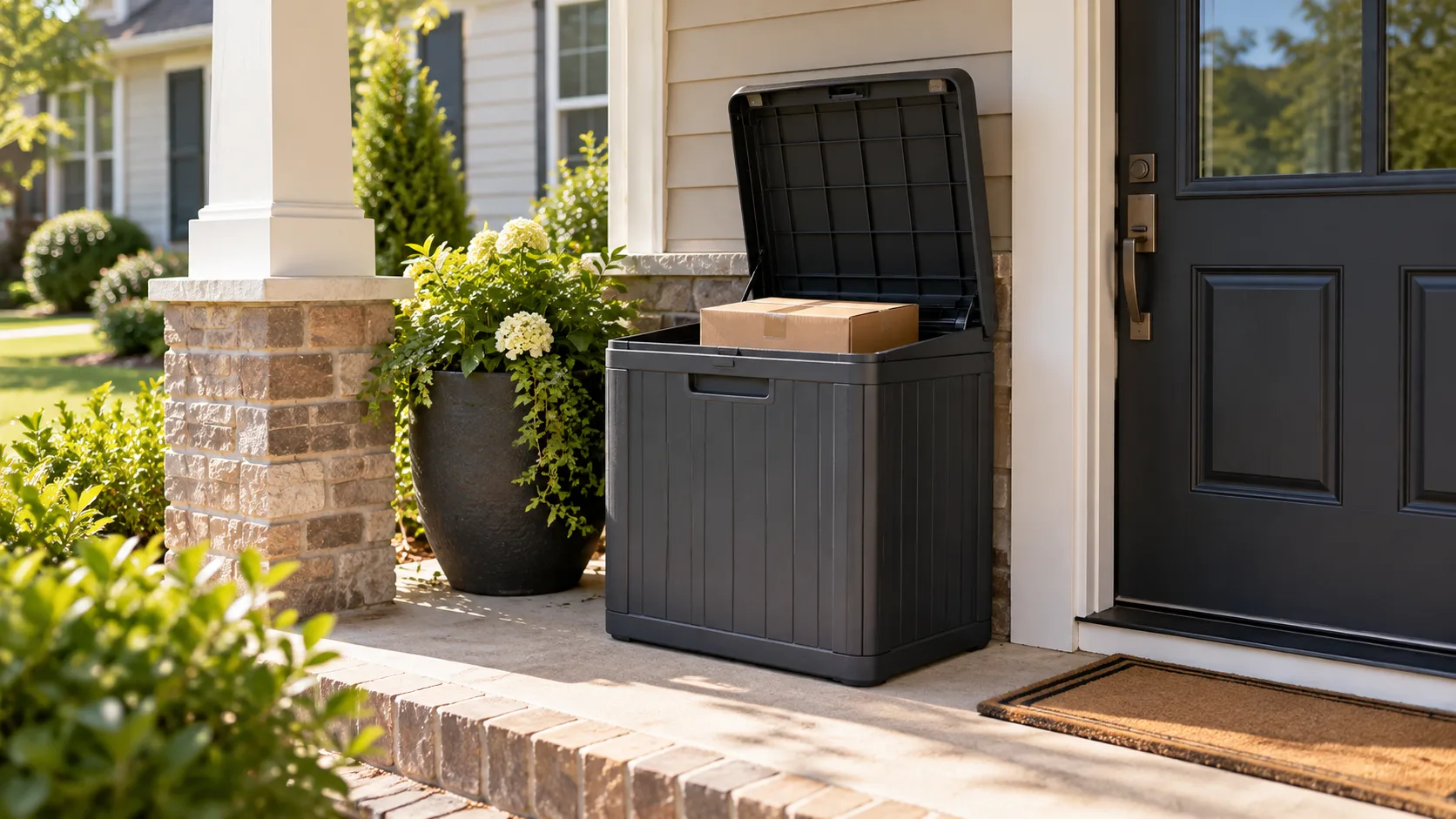
A package delivery box looks like the obvious answer to porch piracy. Bolt a lockable container by the door, the driver drops the parcel inside, nobody walks off with your order. Clean idea.
Then Consumer Reports put three of them on real porches and tracked what happened. Across dozens of deliveries, exactly three packages ended up inside the boxes. Drivers walked past them.
That finding should sit at the top of any honest guide to this category, because it decides whether your money does anything at all. The hardware is rarely the problem. Getting a stranger on a tight route to notice your box and choose to use it is the problem.
This guide covers what the category does well, the one product type carriers already use without being asked, and the five options worth your money once you understand the trade-off.
⚡ Quick answer
The most reliable package delivery box is a large locking mailbox, because carriers are already trained to use mailboxes. The Architectural Mailboxes Oasis 360 costs about $99 and takes small parcels through a locked hopper. For bigger boxes, the Keter Delivery Box is the simplest standalone option. Whichever you choose, add delivery instructions to every account you order from.
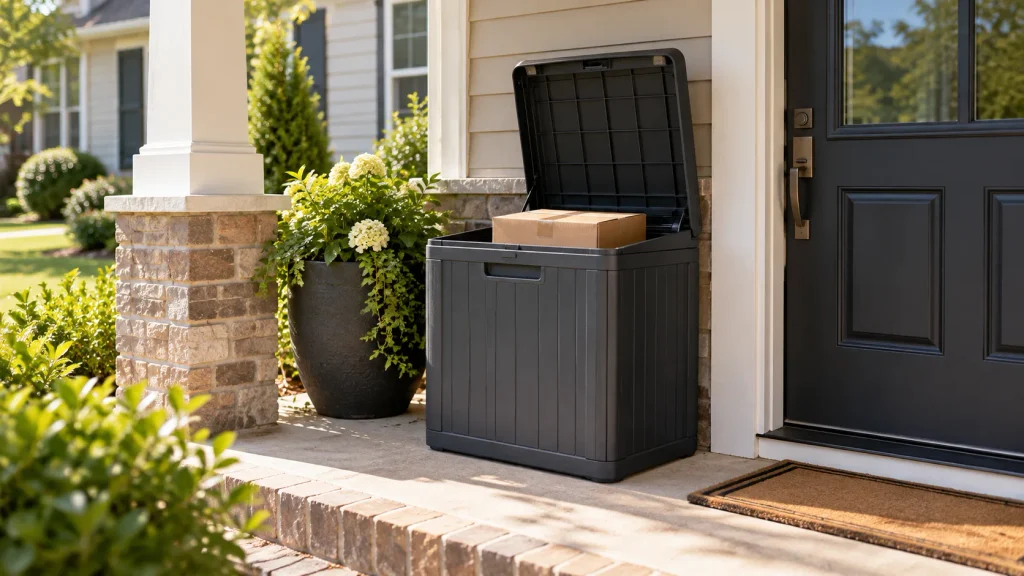
Table of Contents
Quick verdict
Our top pick: Architectural Mailboxes Oasis 360
The Architectural Mailboxes Oasis 360 is the best package delivery box for most homes. If you want a standalone drop box, the Keter Delivery Box is the simpler choice, and the Yale Smart Delivery Box is the connected option. Whichever you choose, where you put it matters as much as the box itself.
- Best overall
- Architectural Mailboxes Oasis 360
- Best standalone drop box
- Keter Delivery Box
- Connected option
- Yale Smart Delivery Box
The problem nobody mentions: the driver has to use it
Every other guide to this category starts with features. Capacity, lock type, whether the app sends a notification. All of that is downstream of one question: will the person carrying your parcel put it in the box?
Direct answer: Carrier compliance is the weak point of every package drop box. Consumer Reports tracked dozens of deliveries across three boxes and found only three parcels were placed inside. A delivery box works when you have a regular driver who knows about it, and underperforms when you do not.
The reasons are mundane. A driver on a two-hundred-stop route has seconds per house. An unfamiliar container near the door is ambiguous: is it a bin, is it furniture, is it the customer’s. Some drivers are instructed to photograph the parcel where they leave it, and a closed box makes that awkward. Others simply default to the mat because that is what they always do.
None of this makes the category worthless. It means the box is one half of a system, and the other half is making sure drivers know it exists.
How to make a parcel drop box actually get used
Five things move the odds, and four of them are free.
- Set delivery instructions on every account. Amazon, UPS My Choice, FedEx Delivery Manager and the USPS all let you save a standing note. Write it plainly: “Place parcels in the locked box to the left of the front door.” This is the single highest-impact step.
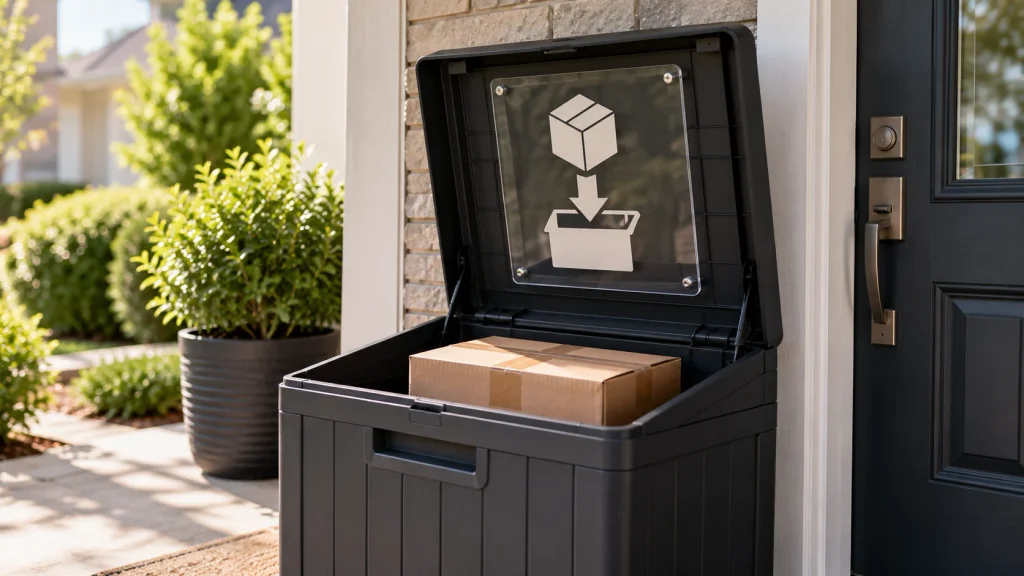
- Label the box itself. A weatherproof sign reading DELIVERIES in large letters, on the lid, facing the approach. Drivers read at a glance or not at all.
- Put it in the walking path. Not tucked beside the garage. Between the gate and the door, where someone heading to the mat passes it.
- Talk to your regular driver. Unglamorous and effective. If the same person covers your street most days, thirty seconds of conversation beats any app feature on this list.
- Leave it open when you are expecting something. Most boxes let you do this. A lid already up removes the hesitation entirely.
Consumer Reports reached a blunter conclusion worth repeating: for households without a consistent driver, a camera at the door may do more than a box. If that describes you, our guide to the best doorbell camera without subscription covers the cheaper route.
Delivery box or a mailbox for packages?
This is the fork in the road, and most buyers never realize there is one.
A standalone delivery box for packages sits by your door and holds large parcels. A large package mailbox replaces your curbside box with a bigger locking unit that takes mail and small parcels through the same hopper.
Direct answer: Choose a parcel mailbox if most of your deliveries are small, because letter carriers already use mailboxes without being asked. Choose a standalone delivery box if you regularly receive items too large for a hopper. The mailbox route has far better compliance; the box route has far better capacity.
The compliance gap is the whole argument. A letter carrier opens your mailbox every working day as a matter of routine. No sign, no instruction, no conversation required. That habit is worth more than any smart lock, and it is why a large mailbox for packages outperforms a more capable box that drivers ignore.
The catch is size. A parcel box hopper that accepts a padded mailer or a small carton will not take a case of dog food. And a parcel mailbox only helps with USPS and whichever couriers choose to use it, which is not all of them.
Plenty of households end up with both: a locking mailbox at the curb for everyday mail and small parcels, and a box at the door for the rest. If you are replacing your curbside unit anyway, our guide to locking mailboxes covers that side in full.
Package delivery box comparison
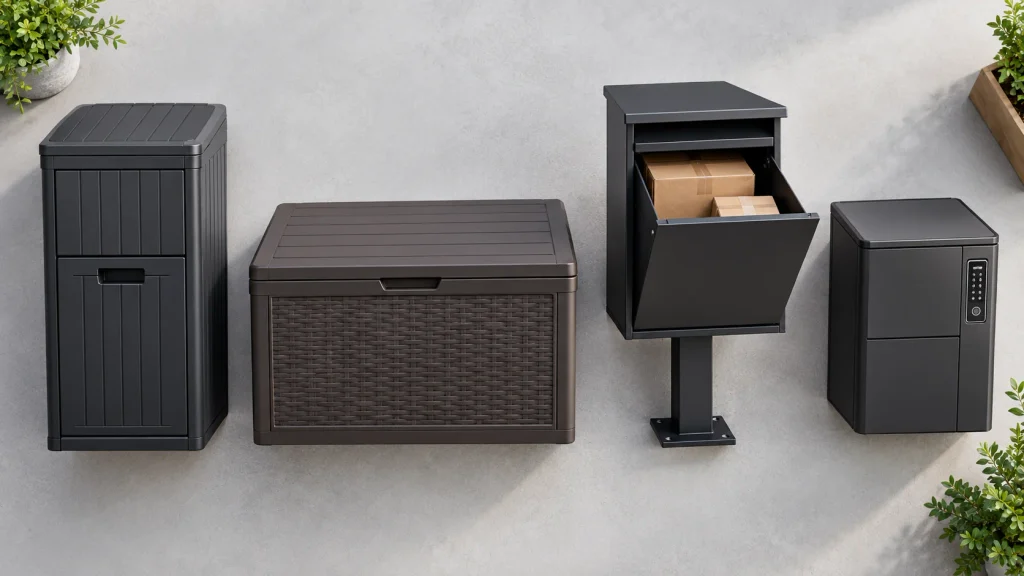
| Product | Type | Locks? | Carrier compliance | Typical price |
|---|---|---|---|---|
| Architectural Mailboxes Oasis 360 | Parcel mailbox | Cam lock | High | $99 |
| Keter Delivery Box | Standalone | Padlock ready | Medium | $180 to $220 |
| Yale Smart Delivery Box | Standalone, smart | Auto-lock | Medium | $230 to $265 |
| Danby Parcel Guard | Standalone, smart | Auto-lock | Medium | $399 |
| Step2 Express | Standalone bin | No lock | Medium | $70 |
Carrier compliance is our own judgement rather than a measured figure. It reflects whether the format is one drivers already handle as routine.
The 5 best package delivery box picks
1. Architectural Mailboxes Oasis 360: best overall
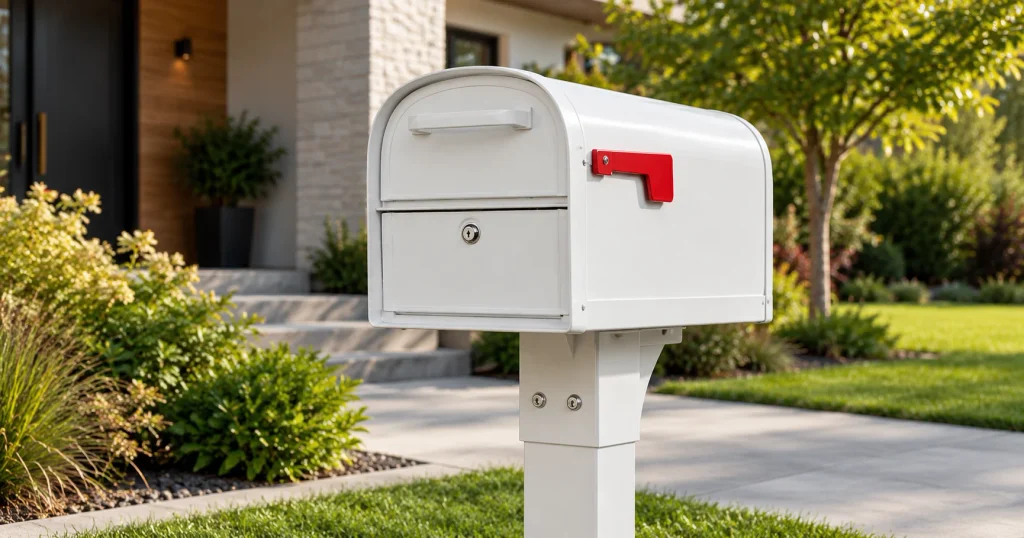
Our top pick is not a delivery box at all, and that is deliberate. The Oasis 360 is an oversized locking mailbox with a top hopper that drops mail and small parcels into a secured lower compartment. You retrieve them through a locked rear door with one of four supplied keys.
It wins on the metric that actually decides outcomes. Your letter carrier opens the mailbox every working day without being asked, which is the compliance problem solved by default. Galvanized steel body, powder-coat finish, steel cam lock, magnetic closure, and USPS approved for curbside use. Around $99 in black, with gray and white options.
For a household whose deliveries are mostly envelopes, padded mailers and shoebox-sized cartons, this is the sensible purchase. It costs a quarter of a smart box and gets used.
Where it falls short: capacity is the ceiling. The manufacturer does not publish a maximum parcel size for the hopper, and anything genuinely bulky will not fit. It also mounts on an Architectural Mailboxes post marked J, sold separately, so budget for that. Measure a typical delivery before assuming it will go through.
2. Keter Delivery Box: best standalone drop box for packages
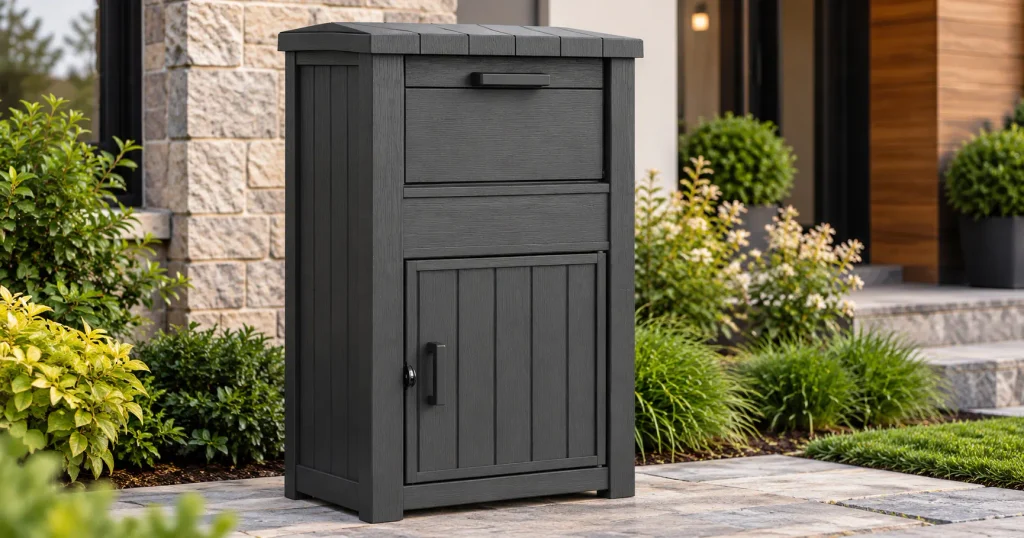
Of the three boxes Consumer Reports tested, this was the one they came away recommending, and the reason was restraint. No app, no sensors, no firmware. A tall resin cabinet with a lockable compartment, and nothing to go wrong.
It stands around 44 to 46 inches tall and roughly 21 by 24 at the base, depending on which listing you read, which takes parcels no mailbox hopper will ever accept. Retrieval is through a lockable door near the bottom with a metal hasp sized for a large padlock. Bolts and expansion anchors are supplied for fixing it to concrete, and the hollow base can be weighted instead.
If you want a secure package delivery box and you are not interested in notifications, this is the straightforward answer.
Where it falls short: the padlock is not included, which catches people out on day one. Consumer Reports also reported that assembly instructions were missing from the box. It is bulky and the colour choice is limited, so a street with an active HOA may object. And it still depends on the driver choosing to use it.
3. Yale Smart Delivery Box: the connected option
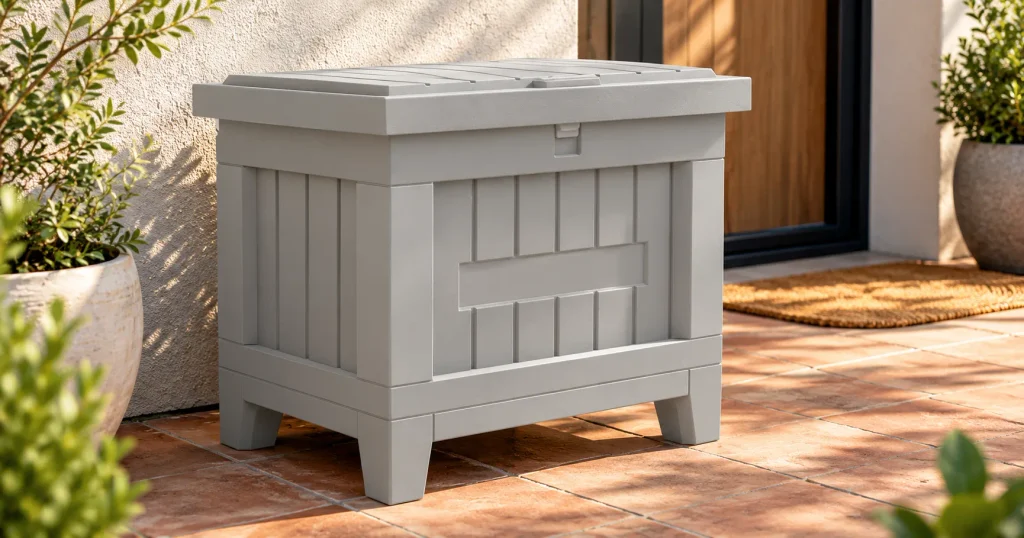
The mechanism is clever. The box sits unlocked, and the moment a driver opens and closes the lid it locks itself and pushes a notification to your phone. No code for the courier to remember, no app for them to install. Expecting several parcels? Keep it unlocked until the last one lands, or unlock it remotely between deliveries.
The Yale Connect Wi-Fi Bridge is included and must sit within about ten feet of the box. Management runs through the Yale Access app. Expect around $265, with a keypad version sold as a separate model. The hollow base takes up to 40 pounds of sand to resist being carried away.
Where it falls short: Consumer Reports did not recommend it, calling it finicky and reporting that the lock sometimes failed to register an open and close cycle, which means a delivery that is not actually secured. Opened by mistake, it locks anyway. The setup drew criticism and so did the app. At this price the Keter does the core job for less, and the Oasis does it for a third.
4. Danby Parcel Guard: the maximalist
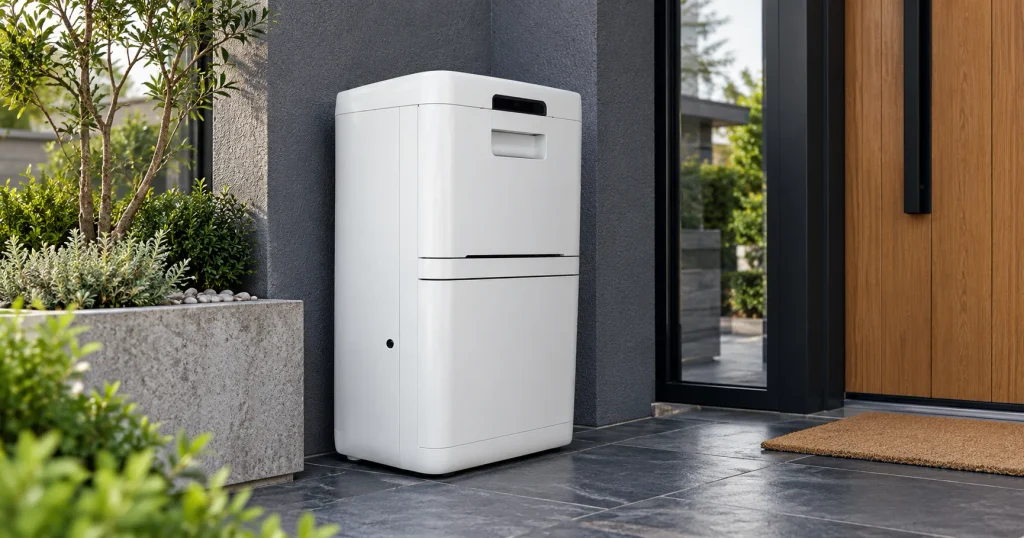
Everything in one unit: camera, keypad, motion sensor, anti-theft alarm, app. Around $399. On paper it is the most complete package delivery lock box on the market.
Included for completeness rather than enthusiasm. Consumer Reports’ verdict was that it tries to do too much and does little of it well, singling out a poor camera and tracking that depends on entering data by hand. If you want a camera near your door, a dedicated one will cost less and work better.
Where it falls short: the most expensive option here, with the weakest independent review. The camera underperforms a $40 standalone unit. Worth considering only if the all-in-one form factor genuinely matters to you.
5. Step2 Express: cheapest, and read this first
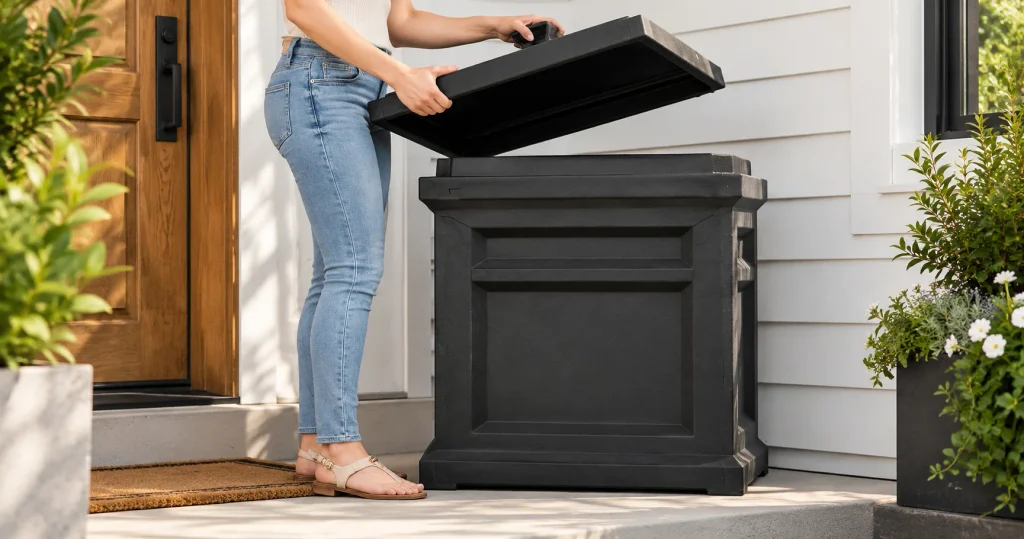
At $69.99 this is the cheapest way into the category, and it sells well. One detail changes what you are actually buying.
Worth knowing: the Step2 Express has no lock. Step2’s own product page states it does not include a built-in latch or lock, and advises against adding one because doing so voids the warranty. The lid lifts off.
That makes it a concealment bin, not a security product. It hides a parcel from someone driving past, which defeats the opportunist scanning for visible boxes, and that is a real if modest benefit. What it will not do is stop anyone who walks up and lifts the lid.
Specifications: 31 inches high, 18 wide, 23 deep, 37.6 gallons, weather-resistant resin, available in black. Step2 suggests sandbags or weights rather than ground anchors.
Where it falls short: no lock, and no sanctioned way to add one. Shipping runs $12.99 on top. Buy it if concealment is enough for your street, and spend the difference on a camera if it is not.
Where to put it
Placement decides compliance, and compliance decides everything else.
- In the walking path, not beside it. Between the gate and the door. A box tucked around a corner is invisible to someone moving quickly.
- Visible from the street. Drivers decide where to leave a parcel before they reach the step. A box they can see on approach gets used far more often.
- Anchored or weighted. An unsecured box with a parcel inside is simply a bigger parcel. Use the ground anchors if supplied, or fill the base chamber.
- Under cover if possible. Weather-resistant is not waterproof. A porch roof or overhang extends the life of any resin box considerably.
- Within camera view. If you already have a doorbell or outdoor camera, frame the box. Footage of a parcel going in settles most delivery disputes.
Mistakes that waste money
- Buying the box and skipping the instructions. The box is half the system. Delivery notes on every account are the other half, and they cost nothing.
- Assuming a lock is included. Several models in this category are padlock-ready rather than padlock-supplied, and one popular option has no lock at all.
- Paying for smart features you will not use. A notification telling you a parcel arrived is pleasant. It is not what stops the theft.
- Measuring nothing. People buy a parcel mailbox and discover the hopper takes an envelope and little else. Measure a typical delivery first.
- Leaving it unanchored. The most common failure, and the easiest to avoid.
- Treating it as a solved problem. Even a good box catches some of your deliveries, not all. A camera covering the approach fills the gap, and our guide to choosing a security camera walks through the options.
How we picked
We built this list from manufacturer specifications read directly from each company’s own product pages and from major retailer listings where the manufacturer publishes little, from the independent testing Consumer Reports carried out on three of these boxes, and from patterns across verified owner reviews with weight given to one and two star reports.
We weighted carrier compliance above features, because the independent testing showed it is the factor that decides whether a box does anything at all. That is why a locking mailbox leads a guide about delivery boxes.
To be clear about our limits: GeniusDwell does not run a physical test lab and we have not installed these five products. Where we state a dimension or a price it traces to a published source. Where a manufacturer omits a figure, as Architectural Mailboxes does for maximum parcel size, we say so rather than estimating.
Frequently asked questions
Do package delivery boxes actually work?
Partially. The hardware secures a parcel once it is inside, but Consumer Reports found drivers used the boxes for only three of dozens of deliveries. They work best with a regular carrier who knows the box exists, backed by saved delivery instructions on every account you order from.
Will Amazon and UPS use my delivery box?
Sometimes, and far more often if you ask. Amazon, UPS My Choice and FedEx Delivery Manager all store standing delivery instructions on your account. Write a short, specific note naming the box and its location. Without that, compliance depends entirely on the individual driver.
What size package delivery box do I need?
Measure your three largest recent deliveries and add some margin. A standalone parcel box typically runs 30 to 46 inches tall and swallows typical cartons. A parcel mailbox hopper handles padded mailers and small boxes, nothing bulkier, so match the format to what you actually receive.
Can someone steal the whole box?
Yes, if you leave it loose. An empty resin box weighs little, and one holding your order is a convenient handle. Use the ground anchors when they are supplied, or fill the hollow base with sand. Most models allow 40 pounds or more of ballast.
Is a parcel mailbox better than a delivery box?
For small parcels, usually yes. Letter carriers open mailboxes as routine, so compliance is far higher. A standalone box wins on capacity and handles couriers who never touch your mailbox. Households receiving a mix of sizes often end up running both.
Do I need a smart delivery box?
Rarely. Smart models add notifications and automatic locking, which is pleasant but does not address carrier compliance, the actual weak point. Consumer Reports recommended the simplest box it tested over both connected models. Spend the difference on a camera instead.
How much should a package drop box cost?
Between $70 and $400. A large locking mailbox sits near $99 and offers the best compliance. A solid standalone box runs $180 to $220. Above $250 you are buying connected features that independent testing has not rewarded.
Are package delivery boxes weatherproof?
Weather-resistant rather than waterproof, which is a meaningful difference. Resin bodies shed rain and snow but seams and lid gaps can admit driven water. Siting the box under a porch roof or overhang protects both the contents and the box itself.
The bottom line
Buy the Architectural Mailboxes Oasis 360 if your deliveries are mostly small. It costs about $99, it locks, and your carrier already opens it every day without being asked. That last point beats every feature on every other box here.
If you regularly receive parcels too big for a hopper, the Keter Delivery Box is the standalone option worth owning, provided you buy a padlock and bolt it down.
Whichever you pick, spend ten minutes saving delivery instructions on every account you order from. The independent testing is unambiguous: a box nobody uses protects nothing, and that one free step does more for your odds than doubling your budget.
A delivery box handles one part of the problem. Watching the approach handles the rest, and a mailbox camera covers the curb while your box covers the step. Browse our full set of home security guides, or see how the pieces fit together into a coherent smart home.